Claw Master – Roguelike Hero
- 4.2
- Rating
- 1.00M
- Installs
- Free
- Price

 Analysis by App-foxy
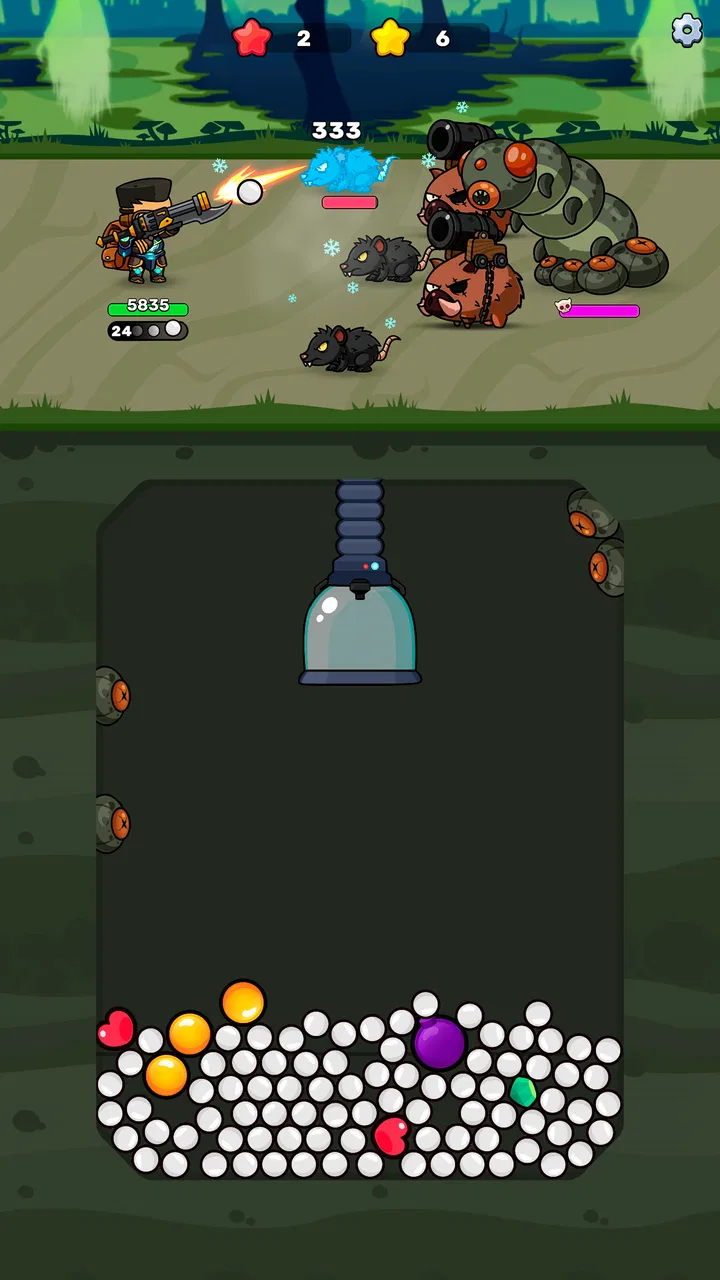
I went into Claw Master – Roguelike Hero expecting a quick arcade distraction, but its central idea is more unusual than that. It takes the familiar action of a claw machine and places it inside a dungeon-crawling role-playing game structure, with enemies, equipment choices, and boss encounters shaping each run. That combination gives the game a personality that many ordinary arcade titles lack.
My overall impression is positive, although it comes with an important qualification: this is best enjoyed as a compact, repeatable mobile game rather than as a deep role-playing adventure. The claw-machine interaction is the hook, while the roguelike progression gives each attempt a reason to continue. When those two parts work together, the game feels playful and surprisingly tense. When they do not, the experience can feel dependent on repetition and chance.
Developed by CASUAL AZUR GAMES, the game is available as a free arcade title for Android, with a content rating of Everyone 10+. It has passed 500K installs and holds an average rating of 4.0 from around 7.3K ratings, which suggests that it has found a reasonably broad audience without being universally loved. I can understand that balance after spending time with it: the concept is easy to grasp, but the long-term appeal depends heavily on how much you enjoy retrying similar challenges and making small improvements.
You May Also Like

 Blood Strike: 2.5 Anniversary
Blood Strike’s Loadouts Turn Every Drop Into a Tactical Gamble
A close look at Blood Strike’s custom loadouts: how fast access to signature weapons reshapes its battle royale rhythm, rewards preparation, and narrows the gap between fights.

 Pandora - Music & Podcasts
Pandora’s Music Is Easy to Start, but Harder to Recover
Pandora’s strength is its low-effort path from a seed to a station. Its weak spot is how much confidence it asks you to place in connection, setup, and quiet recovery.

 8 Ball Pool
 Is Built on Rivalries, Rematches, and Routine
A close look at the rivalries, rematches, shared routines, and unanswered safety questions that turn a quick pool match into a persistent mobile community.

 Samsung Music
’s Quiet Strength Is Playing What You Already Own
Its reach comes less from spectacle than from dependable access to a personal library. That simplicity is both the app’s strongest retention engine and its ceiling.

 AccuWeather: Weather Radar
AccuWeather Review: A Quick, Clear Forecast for Everyday Decisions
For everyday plans, the best forecast is the one you can understand quickly. AccuWeather makes rain timing, radar, and local conditions easy to act on, with a few trade-offs.

 Hill Climb Racing
Why Hill Climb Racing Still Turns Crashes Into One More Run
A tiny car, a bumpy hill and one more upgrade: Hill Climb Racing keeps resurfacing because its simple chaos makes every near-miss feel personal.
More From Our News Desk



Why the claw-machine idea works better than it sounds
The most effective part of the design is the way the claw-machine theme changes the feeling of a normal dungeon run. In a conventional arcade game, I usually focus on reaction speed, timing, or avoiding hazards. Here, the claw imagery makes every interaction feel more tactile and slightly unpredictable. Even when the underlying goal is familiar, the presentation gives it a different rhythm.
That rhythm is especially useful during short sessions. I can open the game when I have only a little time, make progress through a few encounters, and stop without needing to commit to a long story sequence. It fits the moments when I am waiting for transport, taking a break between tasks, or looking for something more active than a puzzle but less demanding than a full console-style game.
The roguelike structure also helps prevent the claw-machine concept from becoming a one-joke gimmick. A single claw challenge might be amusing for a few minutes, but the dungeon framework gives the action a wider purpose. I am not simply grabbing objects for its own sake; I am trying to build enough momentum to survive further encounters and reach stronger opponents. That forward pressure is what keeps the unusual theme from wearing out immediately.
Runs reward decisions, not just quick fingers
What I found most interesting was the tension between immediate gains and longer-term survival. A tempting reward can be useful now, but it may not be the best choice for the next section. This creates small decisions that matter more than the simple controls suggest. The game is not a complex strategy title, yet it asks me to think about whether I should chase a short-term advantage or prepare for a harder fight.
That is one of the less obvious strengths of the design. Players who treat every encounter as an isolated arcade challenge may miss the value of planning across a run. I had better results when I considered the likely demands of the next stage instead of automatically taking the first attractive option. The game becomes more satisfying when I view each move as part of a route rather than as a separate reward screen.
There is also a useful psychological difference between failure here and failure in a pure reflex game. In a standard arcade title, losing can feel like proof that my timing was poor. In this game, a failed attempt can also reflect a weak build, an unlucky outcome, or a decision made earlier in the dungeon. That makes failure less straightforward, but it gives me more reasons to try again. I can change my approach instead of merely trying to react faster.
Boss battles give the runs a clear destination
The boss encounters are important because they give the dungeon sections a sense of shape. Without a meaningful target, the repeated claw interactions could blur together. A boss creates a point at which earlier choices are tested, so I can tell whether my run has developed in a useful direction.
I recommend paying attention to how a run is progressing before reaching that confrontation. If the earlier stages have already consumed too many resources or left the character poorly prepared, pushing forward blindly is rarely satisfying. A better habit is to treat the route as a gradual setup for the boss rather than waiting until the final encounter to think about survival.
This is also where the game differs from the usual endless arcade alternative. Endless games often ask me to survive for as long as possible while chasing a higher score. Claw Master – Roguelike Hero instead gives the session a more defined arc: enter, make choices, handle escalating danger, and see whether the build can withstand the boss. Players who prefer a visible short-term objective may appreciate that structure more than an endless leaderboard chase.
The presentation keeps the tone approachable
The arcade category is a good fit because the game does not demand that I understand a large fictional world before playing. Its premise is immediately readable, and the claw-machine theme gives the action a light, accessible tone. I can hand the phone to someone unfamiliar with role-playing games and explain the basic appeal quickly.
That accessibility does not mean the game is only for children. The Everyone 10+ rating reflects a broad audience, but the repeated runs and boss-focused progression are more likely to appeal to players who enjoy experimenting. Younger players may enjoy the visual idea, while older mobile players may stay for the small tactical decisions that appear between the action moments.
The current version is 1.0.11.11, and the game supports Android 7.0 or later. That makes it accessible on a wide range of Android devices, although compatibility alone does not guarantee that every phone will feel equally comfortable. On a smaller or older device, the game may be less pleasant if the controls or visual elements feel cramped. I would judge the experience on the actual phone rather than assuming that broad system support means identical play everywhere.
Where the experience loses some of its shine
The biggest weakness is that the unusual premise cannot completely remove the repetition built into a roguelike game. A run can be exciting when I am discovering a useful approach, but later attempts may feel familiar if the available choices do not create enough variation. The claw-machine framing makes repetition more charming, yet it does not eliminate the underlying loop of trying, failing, and starting again.
This matters most for players who want a steadily unfolding campaign. If your ideal mobile role-playing game has a large story, extensive exploration, and a long list of permanent character systems, this is probably not the right choice. The game is more focused on compact runs and immediate decisions than on delivering a broad adventure with a strong narrative payoff.
Chance is another factor to consider. The appeal of a claw machine naturally includes uncertainty, but uncertainty can become frustrating when I feel that a run was damaged by circumstances outside my control. The best way to approach the game is to accept that not every attempt will be equally favorable. If you need every loss to feel completely determined by skill, a more precise arcade game may suit you better.
I also think the free-to-play model deserves attention before anyone commits to it as a main game. The download is free, while in-app purchases range from $0.99 to $99.99 per item. That wide range does not automatically make the game unsuitable, but it means I would recommend deciding on a personal spending limit before playing regularly. The core value should come from enjoying the runs themselves, not from feeling pressured to buy your way through an uncomfortable stretch.
For me, the most sensible approach is to treat purchases as optional rather than as part of the expected routine. I would first play enough to decide whether the basic loop remains fun after the novelty fades. If the answer is no, spending more will not fix the central issue. If the answer is yes, keeping the game within a fixed budget helps preserve the casual nature that makes it attractive in the first place.
Small habits make the game more enjoyable
One practical tip is to avoid judging a run too early. A weak opening does not always mean the attempt is doomed, because later choices can change its direction. I found it more useful to look for a coherent path than to chase every individually appealing reward. A collection of mediocre choices that support one another can be more valuable than a powerful-looking option that does not fit the rest of the run.
Another useful habit is to play in focused bursts instead of repeatedly opening the game without a plan. A short session works well when I decide to complete a particular stretch or test one approach. By contrast, playing while distracted makes the chance-based elements feel more irritating, because I am less attentive to the decisions that could have improved the outcome.
I would also suggest separating experimentation from progress. When I am trying to learn how a particular route or build behaves, failure is useful information. When I am short on time and simply want a satisfying session, I choose safer options and avoid unnecessary risks. Treating every run as a serious attempt makes the game feel harsher than it needs to be.
These habits reveal a trade-off that is easy to overlook: the game is casual in its controls, but not always casual in its best decision-making. I can play it for a few minutes, yet I get more from it when I pay attention to how choices connect. That middle ground is appealing to some players and awkward for others.
Who should download it?
I would recommend it to mobile players who like arcade games but want more structure than a score counter provides. It is particularly suitable if you enjoy retrying a challenge, adjusting your approach, and seeing whether a different route can carry you further. The combination of claw-machine presentation and dungeon progression is specific enough to feel fresh, even though the individual ingredients are familiar.
It is also a good candidate for someone who wants a game that can be played in short sessions without feeling completely disposable. A quick attempt still has a beginning, a series of decisions, and a possible boss encounter ahead. That gives the time spent playing a clearer purpose than many simple pick-up-and-play alternatives.
I would skip it if you dislike repeated attempts, unpredictable outcomes, or free-to-play games with optional purchases. Players seeking a calm experience may also find the boss-focused loop more demanding than expected. Likewise, anyone looking for a traditional role-playing game with a substantial story should choose a more narrative-driven alternative rather than expecting the claw-machine idea to provide that depth.
Compared with an ordinary arcade game, this one offers more planning and a stronger sense of progression. Compared with a conventional roguelike role-playing game, it is lighter, faster to understand, and less ambitious. That middle position is its main identity. It will not replace a deep dungeon crawler for dedicated genre fans, but it can work well as a more approachable introduction to run-based decision-making.
My final recommendation
After playing it, I see Claw Master – Roguelike Hero as a clever hybrid with a clear audience. Its strongest achievement is not complexity; it is the way the claw-machine idea gives familiar dungeon decisions a playful surface and a different emotional rhythm. The boss battles help each attempt feel purposeful, while the short-session format makes it easy to fit into everyday mobile use.
Its limitations are just as clear. Repetition can build up, chance may occasionally feel unfair, and the free-to-play purchase range means I would approach spending carefully. Those issues do not ruin the game, but they prevent me from recommending it to everyone who enjoys arcade titles.
For my taste, the free download is worth trying if you want an arcade game with a little more tactical direction than usual. I would give it a fair test over several runs, use the early attempts to learn rather than chase immediate success, and decide about purchases only after the basic loop has proved itself. My recommendation is strongest for players who enjoy experimenting within short, replayable dungeon runs; for everyone else, a more traditional arcade game may offer a cleaner and less demanding experience.
With a 4.0 average and more than 500K installs, it has enough reach to show that the concept connects with a substantial group of players. CASUAL AZUR GAMES has made something distinctive rather than simply another familiar reflex game. I would not call it a must-have for every Android user, but I do think its unusual mix deserves a place on the shortlist of free arcade games for anyone curious about a claw-machine adventure with roguelike pressure.
FAQs for Claw Master – Roguelike Hero
01What is Claw Master – Roguelike Hero about?
Claw Master – Roguelike Hero is an action-packed roguelike game where players take on the role of a hero navigating through procedurally generated dungeons. The game combines strategy, skill, and a bit of luck as players collect unique weapons and power-ups to defeat increasingly difficult enemies. Each playthrough offers a distinct experience due to its ever-changing environments.
02What platforms is Claw Master – Roguelike Hero available on?
Claw Master – Roguelike Hero is available for both Android and iOS devices. Users can download it from the Google Play Store or the Apple App Store. The game is optimized to run smoothly on a wide range of devices, ensuring an enjoyable experience whether you play on a smartphone or tablet.
03Are there in-app purchases in Claw Master – Roguelike Hero?
Yes, Claw Master – Roguelike Hero includes in-app purchases. Players can buy various items such as skins, weapons, and power-ups to enhance their gameplay experience. While the game can be enjoyed without spending any money, purchasing items can provide players with additional advantages and customization options.
04Does Claw Master – Roguelike Hero require an internet connection?
Claw Master – Roguelike Hero can be played offline, which means you don’t need a constant internet connection to enjoy the game. However, some features like leaderboards or events may require internet access to function properly. This makes it perfect for gaming on the go without worrying about connectivity issues.
05What makes Claw Master – Roguelike Hero different from other roguelike games?
Claw Master – Roguelike Hero stands out due to its unique blend of engaging combat mechanics and an extensive array of customizable weapons and abilities. The game also features a captivating art style and intuitive controls that make it accessible to both new and seasoned players. Its dynamic level generation ensures no two playthroughs are ever the same, providing endless replayability.
Pros
- Engaging roguelike gameplay keeps you hooked.
- Variety of heroes adds strategic depth.
- Vibrant graphics enhance the gaming experience.
- Frequent updates with new content.
- Intuitive controls make it easy to play.
Cons
- In-app purchases can be pricey.
- Occasional lag on older devices.
- Limited offline functionality.
- Energy system restricts playtime.
- Some repetitive level designs.

Claw Master – Roguelike Hero
Gallery